IEC 61215 vs IEC 61730: What Each One Actually Proves
Table of Contents
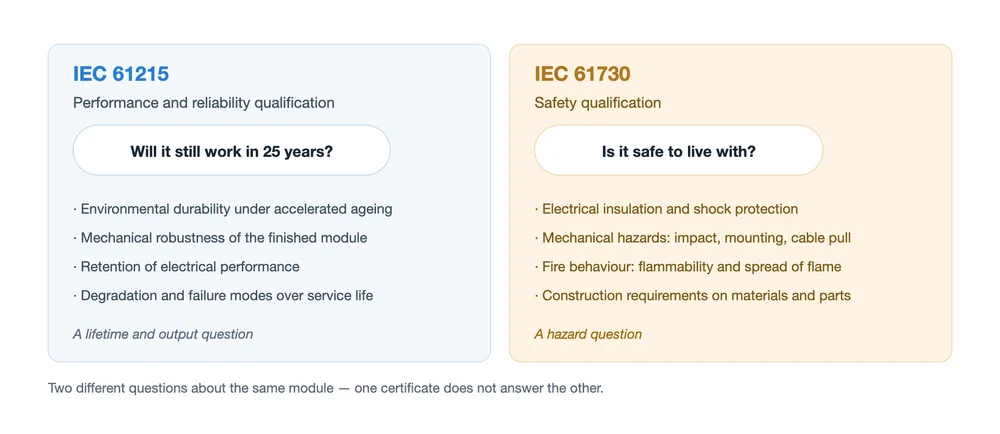
Quick answer: The two standards ask different questions about the same module. IEC 61215 is the performance and reliability qualification: it covers environmental durability, mechanical robustness and retention of electrical performance, and it is what backs a claim about long-term output. IEC 61730 is the safety qualification: it sets construction requirements and then tests electrical insulation, mechanical hazards and fire behaviour. A module going to market normally needs both certificates, because neither one implies the other — a module can survive accelerated ageing and still fail a safety requirement, and a safe module can still degrade faster than its datasheet promises.
If you only remember one line from this page: one standard is about staying alive, the other is about staying safe.
Two Questions, Two Standards
IEC 61215 asks whether the module will keep working: it verifies durability in outdoor service, resistance to degradation and structural reliability over a service life measured in decades. IEC 61730 asks whether the module is safe to live with: it addresses electric shock, fire and mechanical injury, both through requirements on the construction and through tests on the finished module.
Because the questions differ, the documents differ in what they constrain. The reliability standard constrains behaviour over time; the safety standard constrains what the module is made of and how it behaves under fault and abuse conditions. Reading a certificate without knowing which of the two it is tells you almost nothing about the other half.
What IEC 61215 Exercises
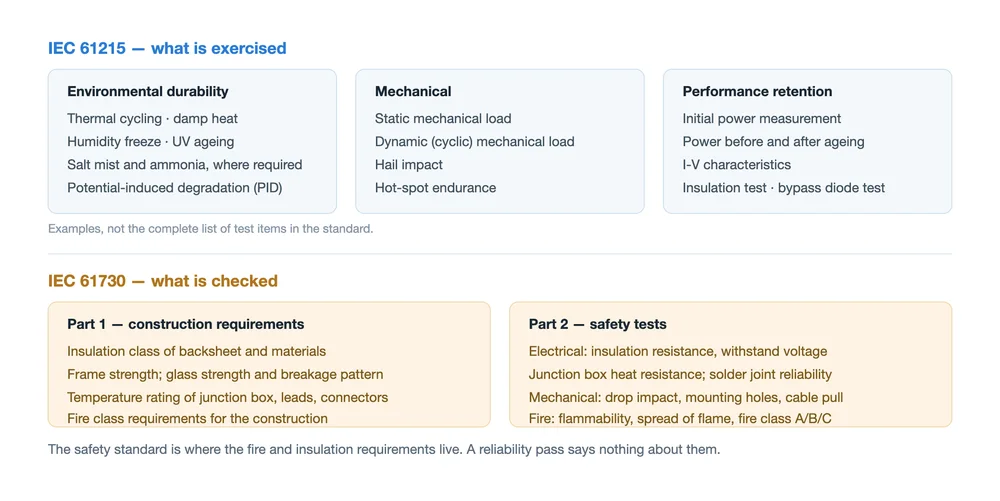
The reliability standard groups its work into three families, and the grouping is useful because it maps to the three ways a module disappoints its owner:
| Family | Typical content | What a failure means |
|---|---|---|
| Environmental durability | Thermal cycling, damp heat, humidity freeze, UV ageing, salt mist and ammonia where required, potential-induced degradation | The encapsulation or interconnect system does not survive the climate it is sold into |
| Mechanical robustness | Static and dynamic mechanical load, hail impact, hot-spot endurance | The module or its mounting interface is not adequate for the mechanical environment |
| Performance retention | Initial power measurement, power before and after ageing, I-V characteristics, insulation test, bypass diode test | Output is lost faster than the degradation limit allows |
Two structural points are worth knowing because they cause most confusion. First, the standard is published in parts: the crystalline silicon module requirements sit in IEC 61215-2, and individual tests are referred to by MQT numbers — the damp heat exposure, for example, is a defined clause rather than a description in prose. Second, a qualification is a design test on a design, not a warranty: it demonstrates that a representative module of that construction passed a defined sequence, and a construction change can put the result back in question.
What IEC 61730 Checks
The safety standard is also published in parts, and the split explains what you are reading in a report:
- Part 1 — construction requirements. The materials and components have to be adequate before any test is run: the insulation class of the backsheet and other materials, frame strength, glass strength and the way it breaks, the temperature rating of the junction box, leads and connectors, and the fire class the construction is expected to achieve.
- Part 2 — safety tests. Electrical safety covers insulation resistance and withstand voltage, plus heat resistance of the junction box and the reliability of solder joints. Mechanical safety covers impact such as drop testing, the strength of mounting holes, and severe cable pull. Fire safety covers flammability and spread of flame, and leads to the fire class rating.
Two classification schemes come out of this standard and are routinely confused. The application class reflects where the module may be installed and who can reach it; the fire class reflects how the construction behaves in a fire. Both are properties of the module as built and mounted — which is why they are quoted in a safety report rather than inferred from a power datasheet.
Why One Does Not Imply the Other
The two certificates are complementary, and the complementarity is practical rather than bureaucratic:
- A module can pass the entire reliability programme and still present a shock or fire hazard if its insulation, clearances or temperature ratings are inadequate for the application.
- A module can satisfy every safety requirement and still lose power faster than promised, because nothing in the safety standard measures degradation over time.
- Construction changes move the two standards differently. Swapping a backsheet or a junction box is a safety-relevant change; changing a cell supplier may be a reliability-relevant one. Treating a certificate as covering “the module” rather than a specific construction and bill of materials is the most common mistake in a procurement file.
Scope: Which Modules, Which Edition
Both standards apply to crystalline silicon and thin-film modules, with the crystalline silicon module requirements carried in the –2 part of IEC 61215. Cell technologies now on the market — TOPCon, HJT, back-contact variants and the rest — fall within the same qualification framework; what changes is how a given construction behaves under the tests, not which standard applies to it.
Editions matter as much as the standard number. Test conditions and pass criteria have been revised over the years, so a certificate should always be read with its year, and compared against the year the buyer’s specification names. The damp heat requirement is a good example of a condition that has stayed stable for two decades while the market’s expectations around it have not.
How the Evidence Is Produced
A certificate is the end of a chain: the standard defines a test and a limit, a piece of equipment produces the measurement, a report records it against a clause, and a certification body turns that into a certificate for a defined construction. Understanding which link a factory controls is what makes a certification plan realistic.
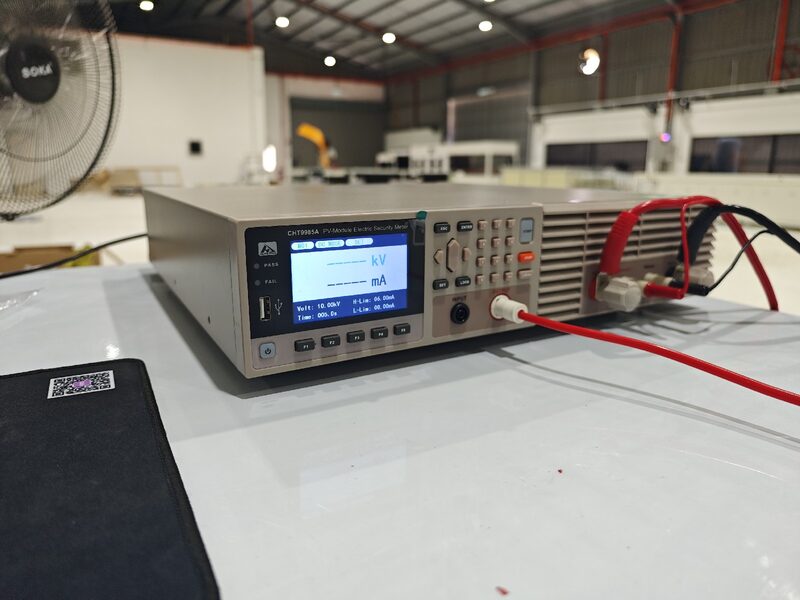
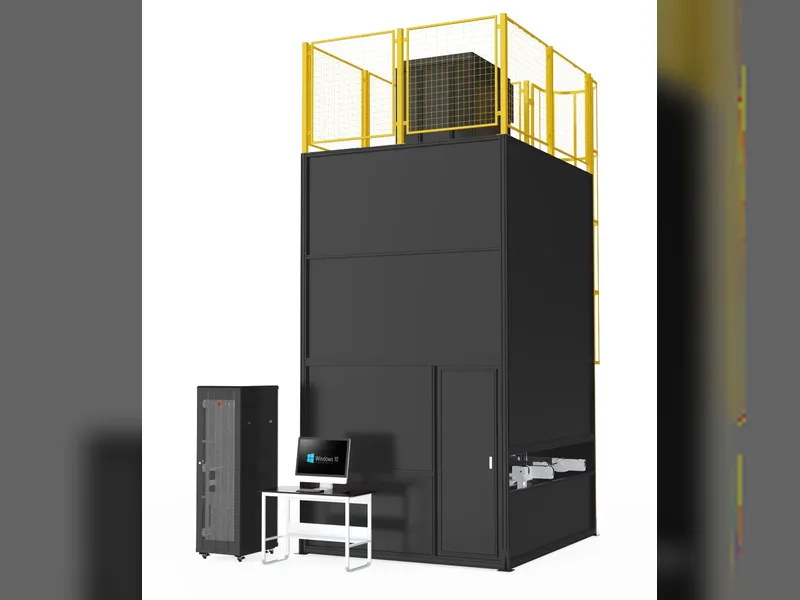
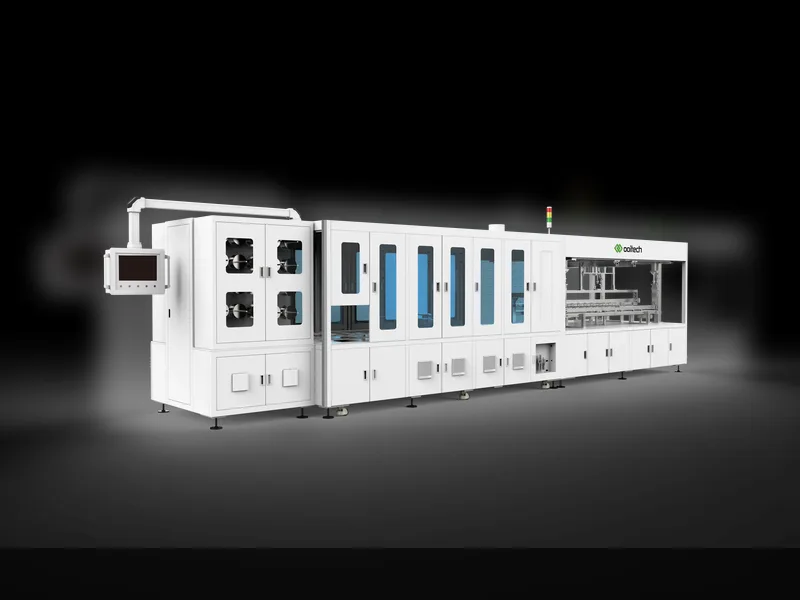
Some of the chain is routinely kept in-house: visual inspection, electroluminescence and I-V measurement, insulation and withstand testing, bypass diode checks and the routine tests that follow every module off the line. That is where testers such as a PV safety comprehensive tester or a hipot insulation resistance tester sit, because they support the electrical safety evidence the safety standard asks for. The long-duration ageing sequences, hail, mechanical load, PID and fire testing normally go to a qualified laboratory with certified chambers and calibrated references.
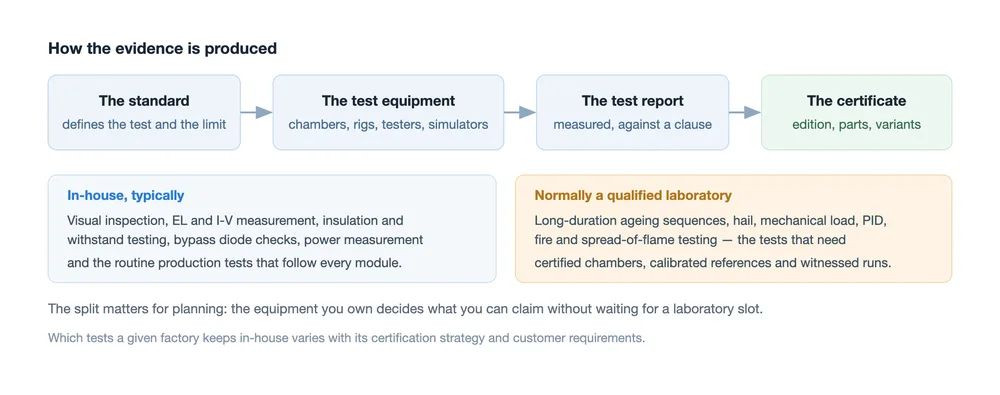
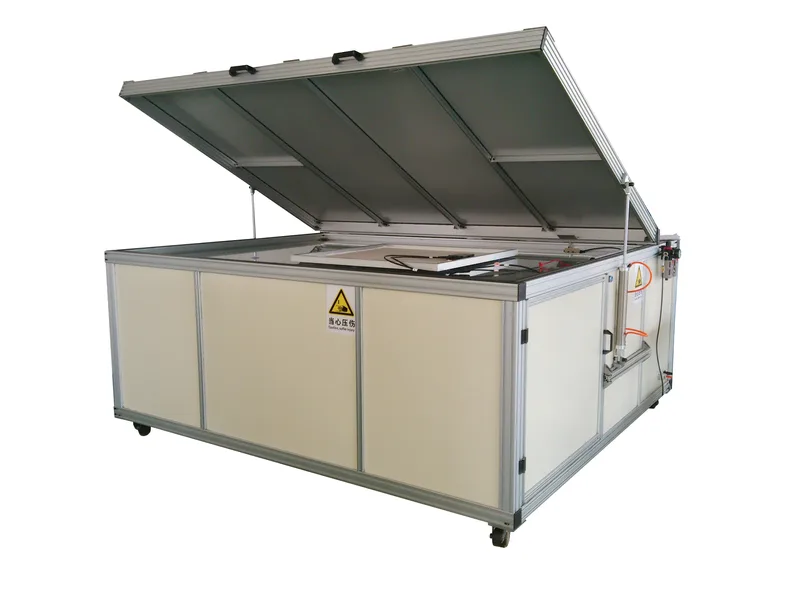
The equipment list behind the reliability side — climate chambers, UV chambers, PID systems, mechanical load rigs, hail testers and simulators — is set out in the IEC certification test equipment overview, and the individual test items on the reliability side are described in PV module reliability tests.
How to Read a Certificate or a Report
Six items turn a certificate from a page in a tender file into usable information: the standard number and edition year; which parts are covered (61215-2, 61730-1 and 61730-2); the construction and bill of materials the certificate actually covers, including module variants; the application class and the fire class where they apply; the laboratory and accreditation behind the test report; and any deviations or exclusions recorded. If a supplier cannot point to the construction covered, the certificate does not transfer to the module being quoted.
FAQ
What is the difference between IEC 61215 and IEC 61730 in one sentence?
IEC 61215 qualifies whether the module will keep performing over its service life; IEC 61730 qualifies whether it is safe in terms of electric shock, mechanical hazard and fire.
Do I need both certificates to sell a module?
For most markets, yes. They are separate qualifications with different scopes, and buyers normally ask for both before accepting a module into a project.
Can a pass in IEC 61215 substitute for IEC 61730?
No. The reliability programme does not test fire behaviour and does not set the construction requirements that the safety standard imposes, so it cannot stand in for it.
What is a fire class on a module certificate?
It describes how the module construction behaves with respect to flame spread and burning, and it comes out of the safety standard’s fire testing. It is a property of the construction and the way the module is mounted, not of the cell technology alone.
What is an application class?
A classification in the safety standard reflecting where the module may be installed and who may come into contact with it, which in turn affects the insulation and accessibility requirements it has to meet.
Does changing a component invalidate the certificate?
It can. Certificates are issued for a defined construction and bill of materials, so a change to a safety-relevant part such as backsheet or junction box has to be assessed against the certificate rather than assumed to be covered.
Final Thoughts
Treat the two standards as two filing cabinets, not two versions of the same document. IEC 61215 holds the evidence that the module lasts; IEC 61730 holds the evidence that it is safe, including the construction requirements behind it. When you review a supplier file, check which standard each document belongs to, which edition it was issued against, and which construction it covers — those three questions resolve most of the confusion that surrounds these two numbers.
Related: how PV standards relate maps IEC, EN, UL and the Chinese standard layers, and explains where the compulsion behind each one actually comes from.
Related: IEC TS 62915 and module retesting explains which changes force which tests, and how an existing certificate is carried forward.