Editorial responsibility for this article rests with Wuhan Ooi Photoelectric Technology Co., Ltd. Written and reviewed by the Ooitech editorial team. See our editorial policy for how we write, where AI tools are used, and how to request a correction.
Why Do BC Solar Cells Need Insulating Glue on the Back?
Table of Contents
Quick answer: Back-contact cells need insulating glue during stringing where a conventional cell does not. The reason is the rear pattern: on a BC cell both polarity contacts are interdigitated on the back, so adjacent solder joints carry opposite polarity and sit close together. Without an insulating layer between them, a ribbon or a solder fillet that bridges the gap creates a short. On a front-contact cell the two polarities are physically separated by the whole cell width, so no glue is required. The glue is applied at defined positions on the rear before or during stringing, and its placement accuracy matters as much as its electrical insulation value, because glue in the wrong place interferes with the joint. This is one of the reasons a back-contact stringer is a different machine rather than a setting on a standard one.
PV Module Manufacturing · by Jerry, Ooitech
The Secret Behind the Glue on BC Cells
Standard solar cells usually don't need any glue during soldering. So why does the BC cell have this extra gluing step?
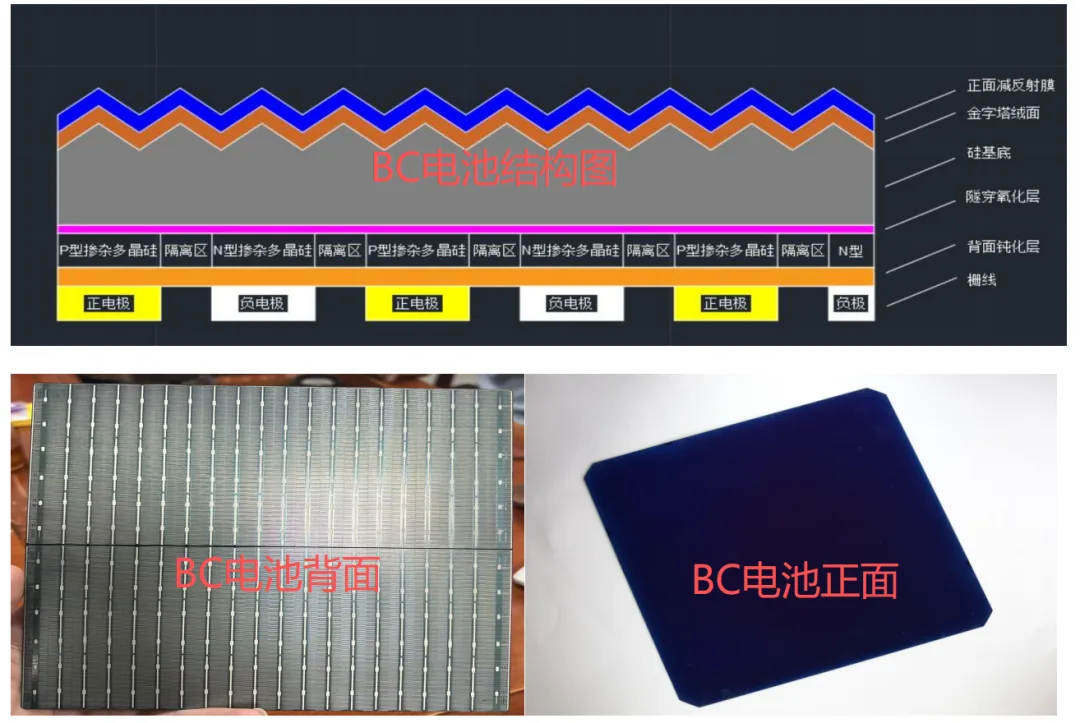
It really just comes down to its unique structure. BC stands for Back Contact Cell. Basically, both the positive and negative terminals are located on the back of the cell. Makes sense now, right? The insulating glue is there to prevent the positive and negative poles from short-circuiting and causing electrical failures. Obviously, you have to apply this glue. It also needs to be wide enough to completely cover the width of the soldering ribbon.
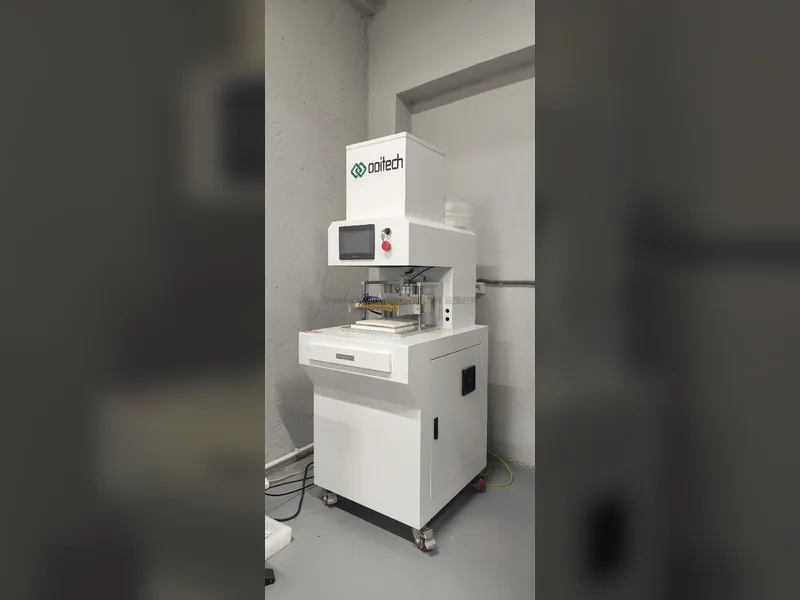
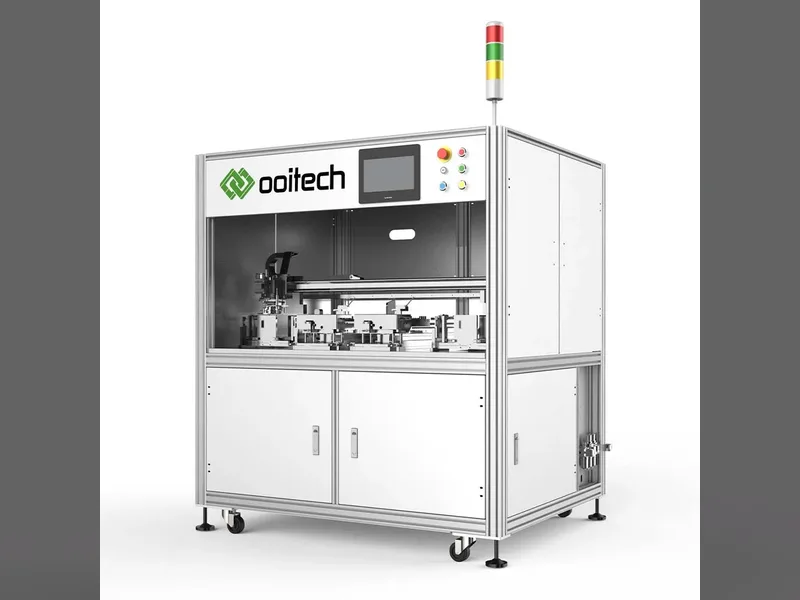
Right now, the industry handles this gluing process in two ways. First, the cell manufacturer can apply it before shipping. This uses a fully cured glue that lasts a long time in storage. Second, the module factory can add gluing equipment to their production line. They buy semi-finished BC cells and apply semi-cured glue since it goes straight into module assembly.
Because BC technology isn't the absolute mainstream just yet, and major players like LONGi and Aiko rarely sell finished A-grade BC cells on the open market, we are actually seeing specialized third-party glue processing factories pop up.
A Closer Look at the Interleaved Design
A lot of folks think the back of a BC cell just separates the positive and negative main busbars. What they miss is that the horizontal thin grid lines (fingers) are also interleaved with positive and negative sections, just like the schematic shows below.
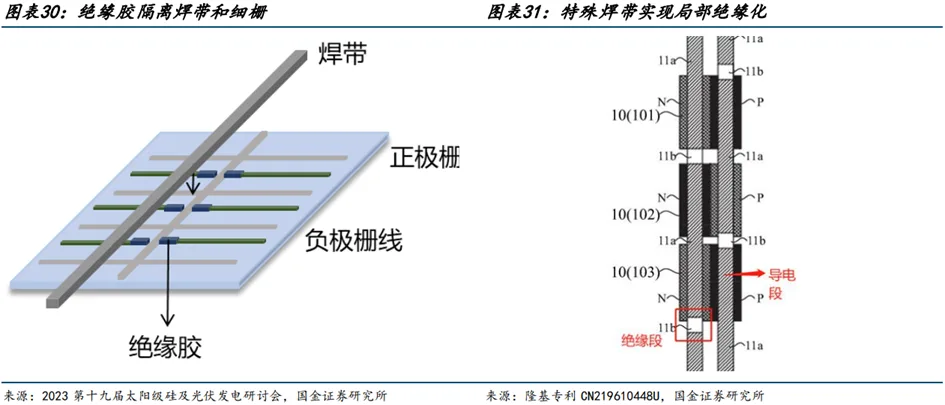
Real-World BC Cell Example
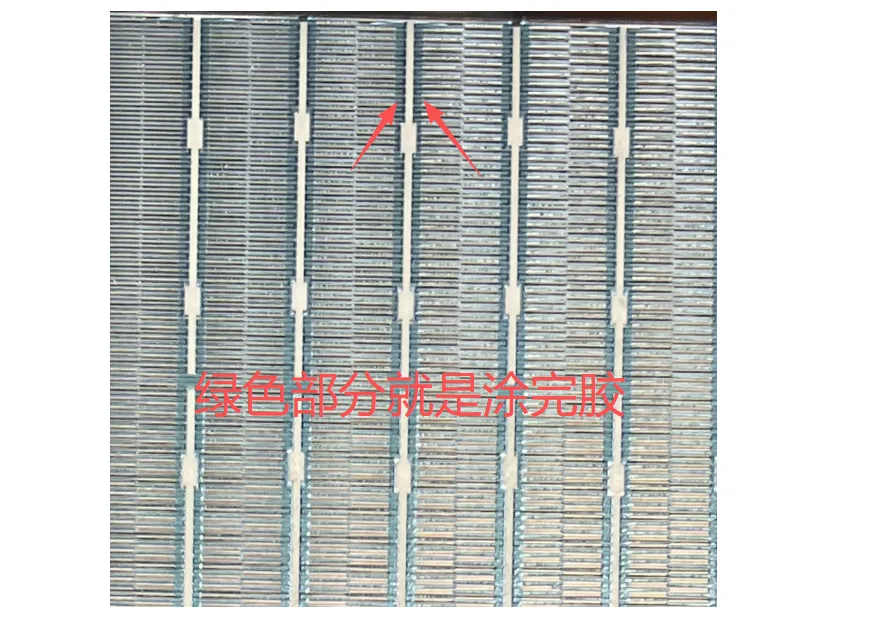
I happen to have a BC cell right here, so let's take a closer look together. You can clearly see two things: the exact position of the insulating glue, and how the negative fingers collect current into the negative main busbar while the positive fingers do the same for the positive busbar.
If you skip the insulating glue here, the soldering ribbon will absolutely touch both poles during the tabber stringer process and short the whole thing out.
Ooitech's View
Working with BC cells completely changes the game for module assembly lines because those interleaved back contacts leave zero margin for soldering errors. We are seeing more module factories integrating dedicated glue machines right before the tabber stringer to handle semi-finished cells and control their own production costs. Upgrading to xBC technology means your equipment needs serious precision to avoid electrical risks. You can catch a glimpse of how modern solar panel production lines handle these precise manufacturing steps by checking out our YouTube channel at www.youtube.com/ooitech.
Related: 0BB on back-contact cells: gains and yield limits explains how 0BB removes most of the lane crossings that the insulation was there to protect.
Related: Flat vs round ribbon: why BC cells break the rule — the strip those rear lanes are built around.
Related: Hybrid contact BC cells: what 28% still has to prove — why each boundary between two rear lanes needs its own isolation cut.
Further reading and background data
Public reference material on this topic, published by the organisations that maintain the industry's technology roadmap and market data: