Editorial responsibility for this article rests with Wuhan Ooi Photoelectric Technology Co., Ltd. Written and reviewed by the Ooitech editorial team. See our editorial policy for how we write, where AI tools are used, and how to request a correction.
Why Do BC Solar Cell Strings Warp Like a Boat?
Table of Contents
Quick answer: Back-contact cell strings warp like a boat because moving all the ribbon to the rear puts the metallisation and its thermal contraction entirely on one side of the cell. When the soldered string cools, the ribbon contracts against an unmetallised front face, and the differential stress bends the string into a curve. On a conventional front-contact cell the ribbon is distributed across both faces, so the stresses partly cancel. The warping is not cosmetic: a curved string does not sit flat on the glass at layup, which produces uneven encapsulant thickness after lamination and can introduce micro-cracks at the joints where the string is pressed flat. Controlling the soldering thermal profile and the cooling rate is the main lever, along with ribbon geometry and the support the cell has during the joint.
PV Module Manufacturing · by Jerry, Ooitech
Introduction
Moving all the ribbons to the back is a signature trait of BC modules. It looks clean, it works efficiently, and it's a favorite pick for premium residential users. But behind that pretty face, the cell string curves like a little boat.
Structural Asymmetry Plus Ribbon Soldering
Both poles sit on the back
Whether it's IBC or TBC, the PN junction of a BC cell lives on the rear side. Positive and negative are both on the back. That's not a symmetric structure. On top of that, the shrinkage stress from the multi-layer back structure is far greater than the front.
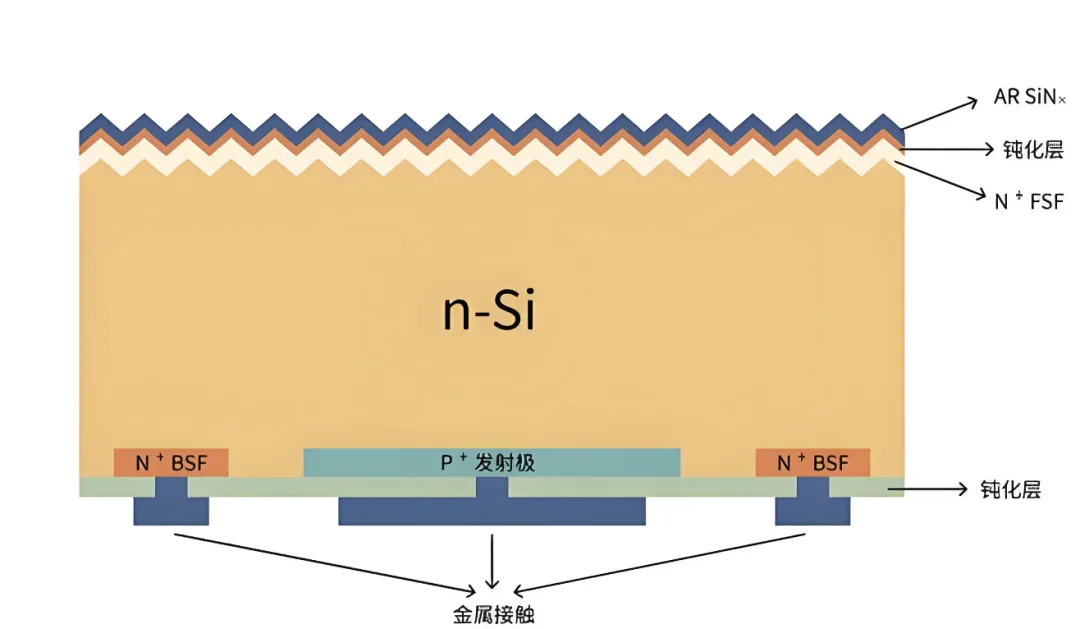
Figure 1: BC cell structure
Single-side high-temperature soldering does the rest
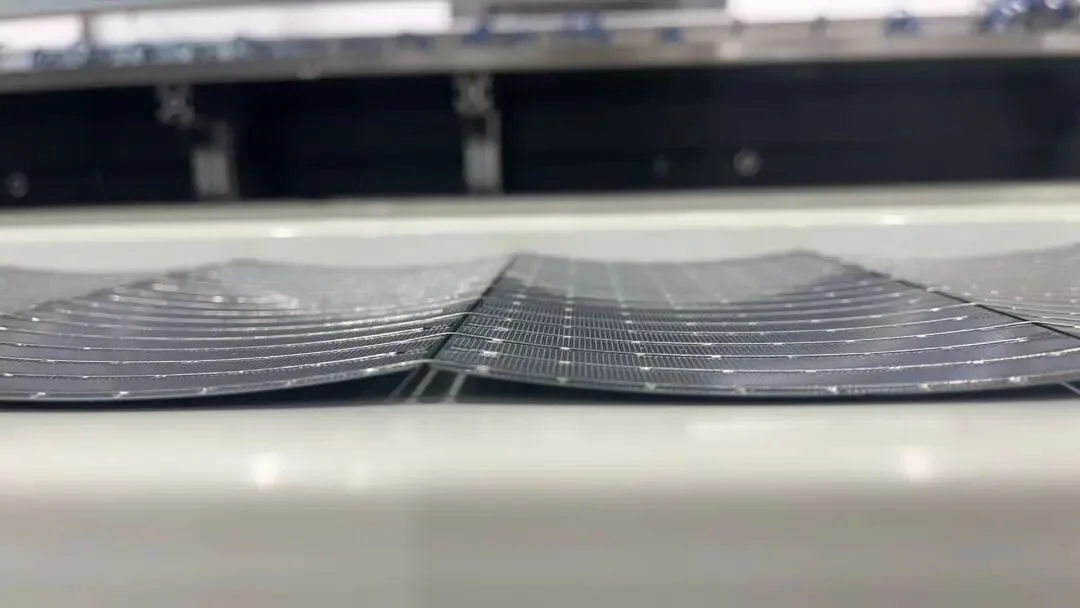
Under the module manufacturing process, cells still have to be joined together with ribbons. Single-side high-temperature soldering then pulls every cell into a backward bow, as shown in Figure 2.
Figure 2: BC cell string in reality
A symmetric TOPCon cell doesn't behave this way, as you can see in Figure 3.
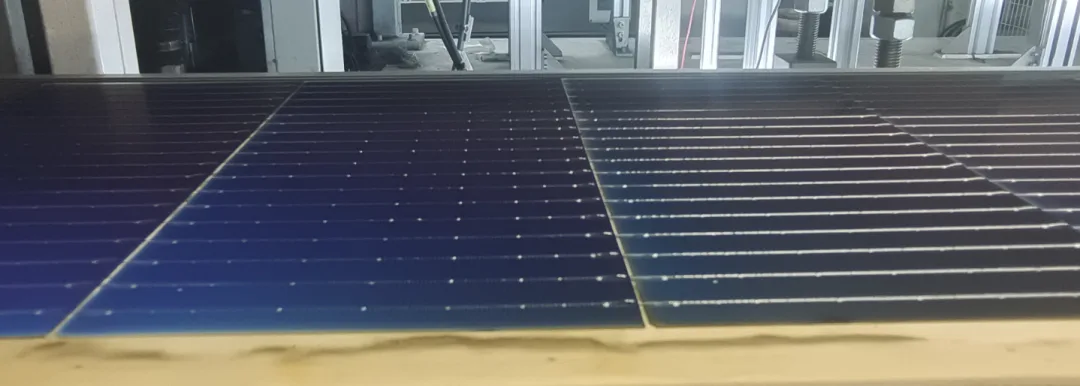
Figure 3: TOPCon cell string in reality
Can This Genetic Flaw Be Fixed? Does It Hurt Reliability?
We ran the tests. Thicker cells don't ease the warping by much. And with wafer thinning being the trend right now, compared to double-side soldering, this problem basically can't be solved. The industry is trying to optimize back gridlines and go with low-temperature soldering, and this phenomenon is judged as OK inside company quality standards.
There's another catch. During the lamination step at the module end, this asymmetric warping from single-side soldering makes the encapsulant film on the cell back flow unevenly under high heat. In some cases there's even a risk of missing film. Long-term reliability stays a question mark.
Maybe one of the solutions in LONGi's technology forest, the one that kills the ribbon, can finally solve this.
Ooitech's View
We see this boat-shaped warping on the line all the time, and it's really a fight between cell physics and process control rather than a defect you can polish away. The lamination flow issue is the part that worries us most, since uneven encapsulant on the rear side is exactly where field failures start years later. From a whole-line standpoint, low-temperature stringing and tighter layup handling matter more than chasing thicker wafers. If you want to see how BC and TOPCon strings actually behave through tabber-stringer and lamination, our factory clips on www.youtube.com/ooitech are worth a look.
Further reading and background data
Public reference material on this topic, published by the organisations that maintain the industry's technology roadmap and market data: