PV Calibration: How to Calibrate a Solar Simulator for Reliable Module Testing
Table of Contents
Introduction: Why Solar Simulator Calibration Matters
In photovoltaic module testing, reliable measurement starts with one thing: a properly calibrated solar simulator. If the simulator output is not controlled accurately, the measured module power, current, and efficiency can all drift away from the true value. In a market where 500 W and higher-power modules are already common, even a 0.5% error can become commercially meaningful.
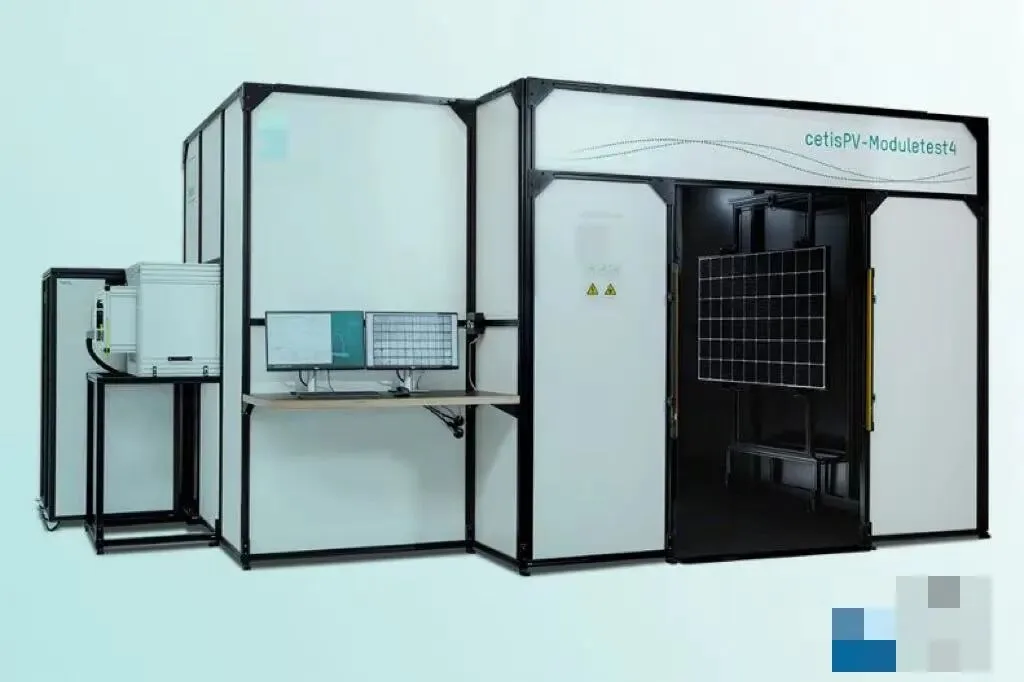
A solar simulator is a device designed to reproduce sunlight under controlled laboratory conditions. It is widely used for PV module performance testing, especially under STC, or Standard Test Conditions. In simple words, it is the main light source behind professional PV electrical testing.
Figure 1 A+ A+ A+ solar simulator
Image source: Internet
Irradiance Calibration Under STC
For most laboratory calibration work, the first target is irradiance. Under STC, the simulator should be adjusted to 1000 W/m² with an AM1.5G spectrum and a cell temperature of 25°C.
In the PV industry, a WPVS cell is commonly used as the Primary Reference Device. Qualified metrology institutes such as PTB or NREL provide the calibrated short-circuit current, or Isc, of the WPVS cell under AM1.5G and 1000 W/m² irradiance. This calibration value is traceable to the International System of Units, and its uncertainty can be as low as around 0.5%.
Because of this traceability and stability, the WPVS cell is often used to transfer a low-uncertainty calibration value to secondary reference devices.
However, module-level solar simulator calibration is not only about setting one number in the software. The test area is large, often around 2.6 m × 1.5 m or even 3 m × 2 m. Before final irradiance adjustment, the irradiance distribution across the test plane should be measured point by point. According to IEC 60904-9, the non-uniformity test area should cover at least 80% of the simulator test area. After that, the average irradiance of the whole test plane can be calculated and used as the basis for calibration.
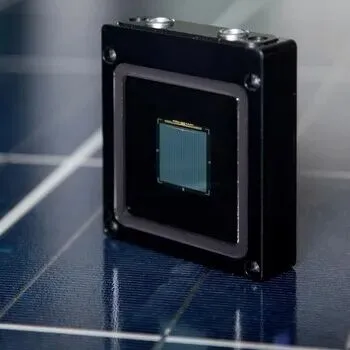
Figure 2 WPVS cell
Image source: Internet
WPVS Reference Cell Monitoring: Small Position Errors Matter
During calibration, the WPVS cell is usually placed at the reference cell position to monitor real-time irradiance during simulator operation. The current signal from the WPVS cell is converted into a voltage signal through an amplifier or resistor, and then read by the simulator system.
The calibration is completed by adjusting the relevant software parameter. For example, some Halm simulators use a calibration value setting, while some Pasan systems use sensitivity settings. In certain systems, the relationship between current and sensitivity is provided directly as a conversion formula.
But there is an easily overlooked detail: the reference cell is often placed outside the main test area. The irradiance at that position may be lower than the average irradiance over the module test plane. If the metrology value is used directly without compensation, the actual irradiance in the module test area may become too high, which will affect the measured power.
Even if the reference cell is placed inside the test area, the issue does not completely disappear. For an A+ class simulator with non-uniformity below 1%, the reference cell is often positioned near the edge of the test zone. This can still introduce a deviation of about 0.5% to 1%. In PV testing, this is not a small number.
The temperature of the reference cell also needs to be controlled close to 25°C. Although the temperature coefficient of Isc is usually relatively small, temperature fluctuation still contributes to measurement uncertainty. If precision is the target, temperature influence should be reduced as much as possible.

Figure 3 Solar simulator test area and reference cell position
Calibration at Different Irradiance Levels
WPVS cells are not only stable; they also offer good linearity. This makes them useful for calibrating simulator irradiance at different light intensity levels. For example, if the target irradiance is 200 W/m², the calibrated Isc value at 1000 W/m² can be multiplied by 0.2 to obtain the expected reference current.
For xenon-lamp solar simulators, large irradiance changes are often achieved with different filters. After changing filters, it is recommended to re-measure irradiance non-uniformity, because the optical distribution may change together with the intensity.
Spectral Calibration: Xenon and LED Simulators
For xenon solar simulators, the spectrum is mainly determined by the lamp source and optical filters. In most laboratories, the spectrum cannot be freely adjusted. Therefore, the correct method is to use a calibrated spectrometer to measure the spectrum at several positions in the test area. According to IEC 60904-4, at least four measurement points are required.
The key is not to make the spectrum look perfect at only one location, but to confirm that the simulator meets the required spectral class over the relevant test area.
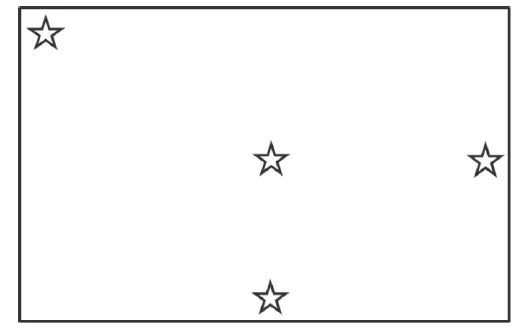
Figure 4 Spectral measurement positions
LED-based solar simulators are more flexible. Their spectral distribution can usually be adjusted through software, making it easier to meet the A+ spectral requirements in IEC 60904-9. Still, the spectral deviation, often discussed through SPD-related evaluation, should be kept as low as possible.
One practical concern is that LED simulators are normally built from multiple LED circuit boards. This can lead to noticeable spectral non-uniformity across the test plane. For this reason, it is better to measure more points instead of relying only on the minimum requirement.
Another important point: LED simulators can achieve large irradiance changes without filters, but their spectrum may still change at different irradiance levels. Whenever the irradiance setting changes significantly, the spectrum should be checked again rather than assumed to remain unchanged.
Summary: Calibration Is the Foundation of PV Measurement

Solar simulator calibration is one of the foundations of accurate PV module testing. In the laboratory, the main purpose is to achieve precise measurement and then transfer high-quality calibration values to secondary reference devices.
In production lines, the calibration strategy can be different because speed, repeatability, equipment stability, and factory process control all become part of the measurement system. But the core principle remains the same: the light source must be controlled, verified, and understood.
Both irradiance calibration and spectral measurement require careful work. Reference cell position, test-area non-uniformity, filter changes, LED spectral distribution, and temperature control can all influence the final power result. In PV testing, small errors do not stay small for long.
Ooitech's View
As an equipment supplier working with solar module production lines, Ooitech sees solar simulator calibration not as a one-time setting, but as part of the entire factory quality-control system. For high-throughput module manufacturing, the IV tester and solar simulator must be matched with clear calibration routines, stable reference devices, and practical operator training; otherwise, laboratory accuracy may not translate into production-line repeatability. The real challenge is to balance precision with daily manufacturing efficiency, especially when advanced module technologies and higher power ratings make small measurement deviations more visible.